Build your greenhouse with a HortiQ certified builder and installer
The quality of your greenhouse and materials are prerequisites for a successful business. That's why Hagelunie has been working closely with HortiQ fo...
A practical checklist
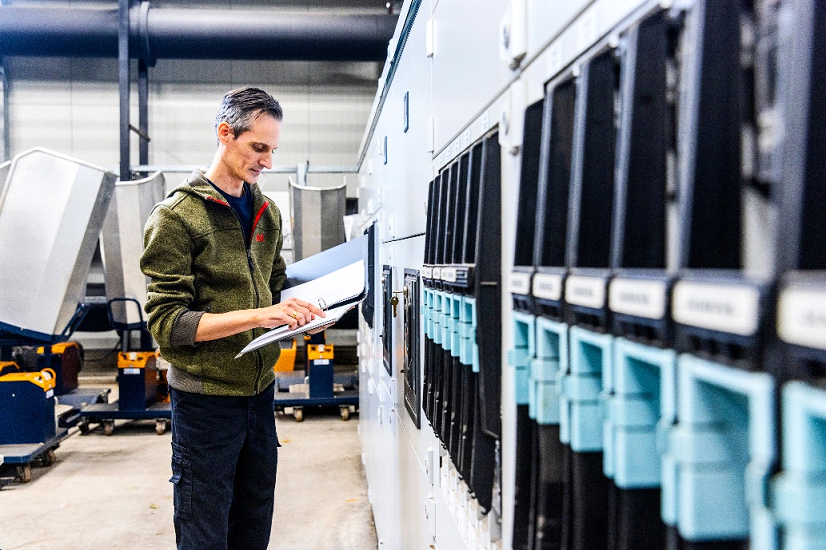
Greenhouse horticulture relies heavily on technology to support cultivation and ensure efficiency. Proper maintenance is crucial to prevent malfunctions that can cause downtime, damage, and extra costs. Different systems require maintenance at varying intervals, with some needing annual checks and others less frequent attention. Following preventive maintenance tips helps keep your greenhouse business safe, reliable, and operational.
Transformers are made to last a long time. In practice, they often come under heavy load in greenhouse horticulture. With frequent switching on and off, they wear out more quickly. In this case, a lifespan of about 15 years is normal. The oil in a CHP engine gets dirty while it runs. Contaminated oil can cause damage and result in malfunctions. Medium voltage systems require regular inspections. Small problems can have major consequences. Circuit breakers last longer when they are maintained properly: Junction boxes are important for a safe electrical system. Poor connections can get hot and cause malfunctions. Steel water silos can rust. This often occurs slowly and is not immediately noticeable. The quality of the central heating water is important for pumps, valves and heat exchangers. Contaminated water leads to faster wear. Electrical installations must be safe and work properly. Maintenance consists of: Control systems need to be reliable in order to prevent damage.
Schedule fixed inspection rounds to do this, for example together with an employee. Address findings as quickly as possible. This will help keep your technical systems under control and keep your business safe and resilient. Or would you like us to help look at the risks in your greenhouse business? Please contact your broker or a risk expert at Hagelunie.Transformers
Combined heat and power (CHP)
Medium voltage systems
Circuit breakers (400 Volts)
Junction boxes
Water silos
Central heating water
Electrical installations
Water, heat and CO₂ technology
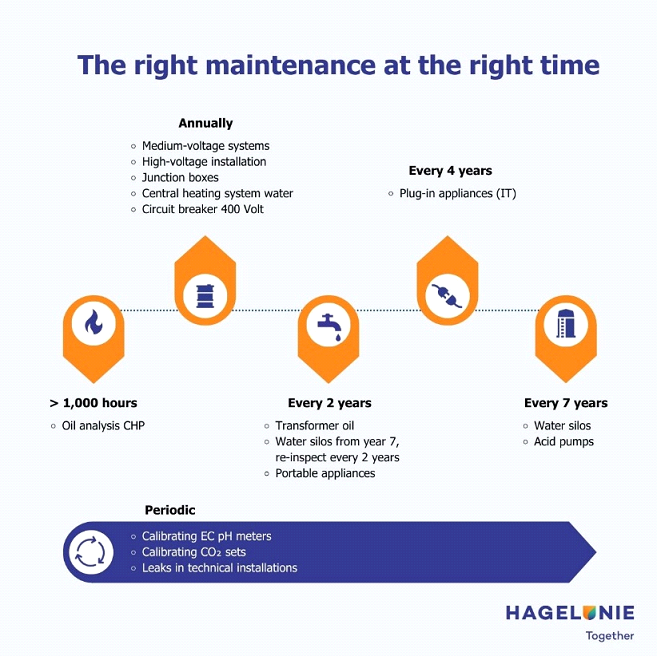
With good preventive maintenance, you reduce the risk of malfunctions and unexpected costs.
Do you have questions about preventive maintenance?